
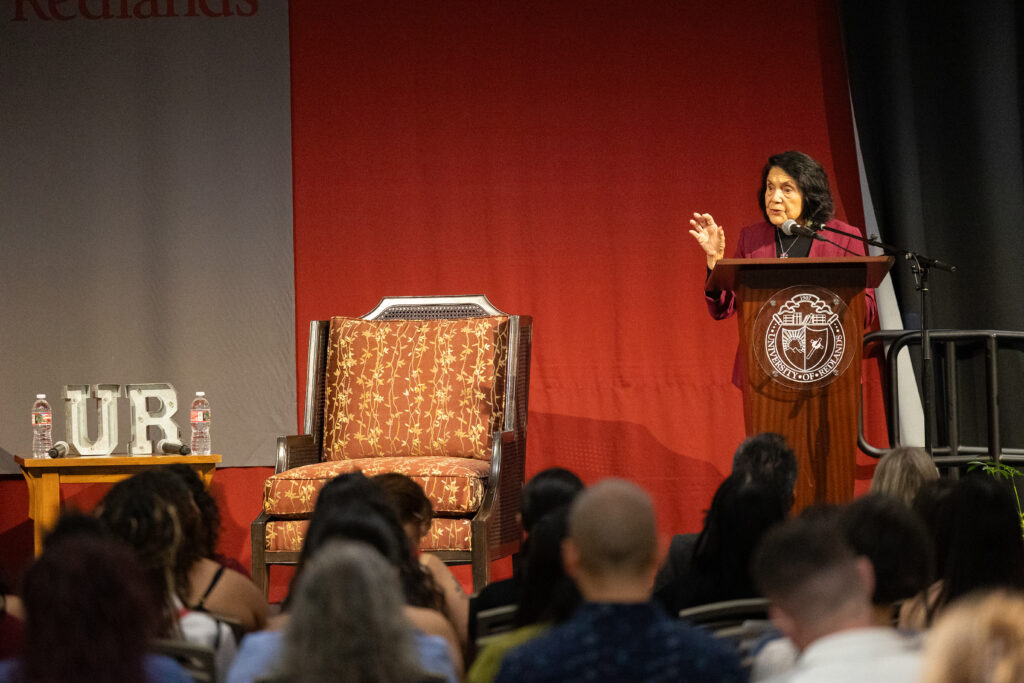
With a theme of “Hope: Creating Change Together,” this year’s Social Justice Conference discussed all things equality and activism.
Students Address Social Justice
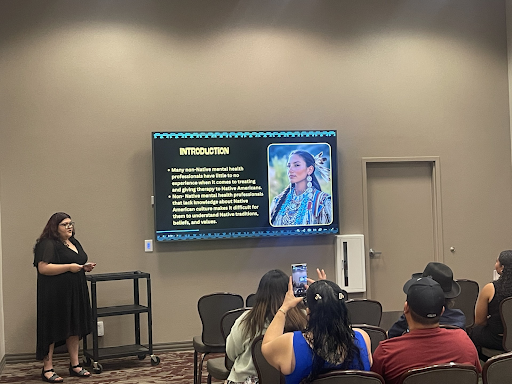
This annual event took place on March 13 from 9 a.m. to 4 p.m. in Orton Center. The day was divided into three sections of morning and afternoon sessions capped off by Dolores Huerta’s keynote in the evening. Throughout the daytime sessions, more than 70 students presented their research projects through a variety of social topics and mediums, including a Gender and Nation Roundtable, Theater for Empowerment and Change Workshop, Justice Across Discipline Poster Presentation and Reading for Liberation.
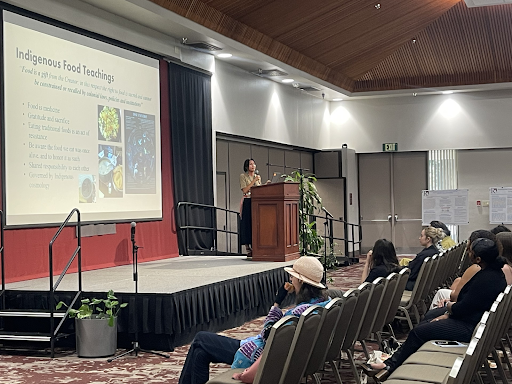
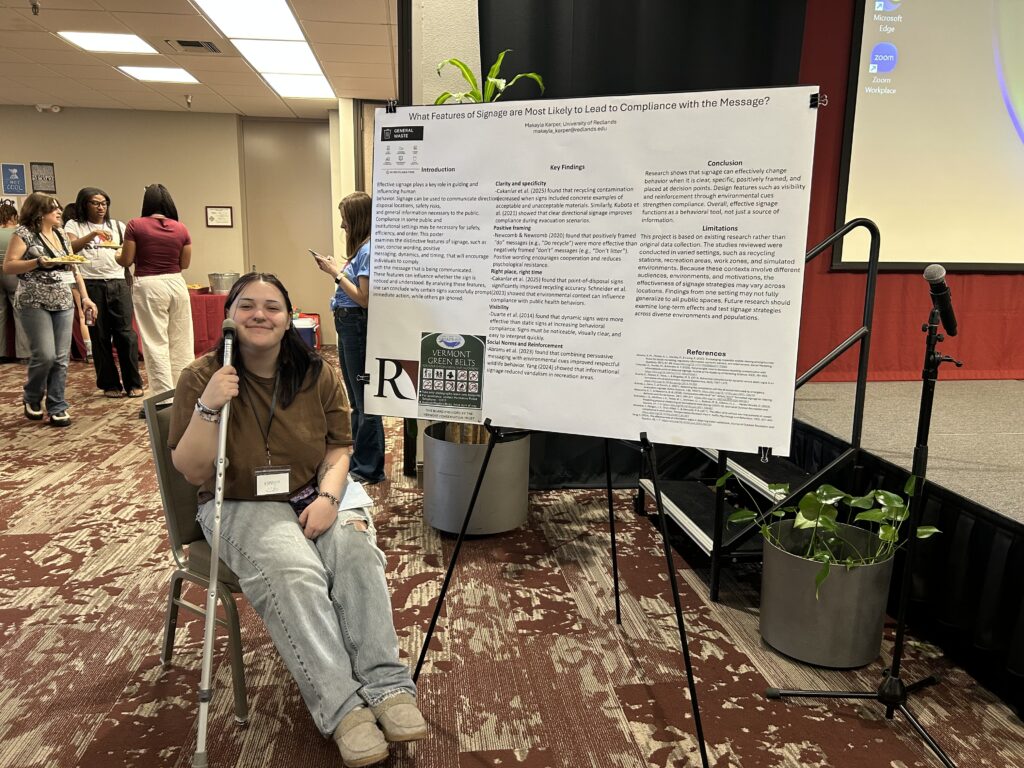
Students from the Environmental Psychology, Environmental Justice and Energy & the Environment courses prepared posters for the Justice Across Discipline symposium, including Environmental Psychology students Makayla Karper ‘26 and Kiera Beyer ‘27.
Karper conducted research on how signs influence public compliance, discovering that best compliance was achieved with simple, positively-framed signs. She pointed out how the same often applies to social justice activism in the sense that greater change results from straightforward, non-violent organizing.
Karper said she appreciates the social justice conference and its significance in bringing issues to the surface.
“Even if it doesn’t completely change people’s behavior and habits, at least they’re aware of it,” she said.
Beyer’s project examined the correlations between personalities and pro-environmental behaviors. In analyzing seven major personality traits, she found ‘openness to experience’ and ‘agreeableness’ are closely associated with environmentally friendly actions.
“Personality affects your attitude and your concerns and your beliefs about the environment, which then correlates with you actually acting upon those attitudes,” she said.
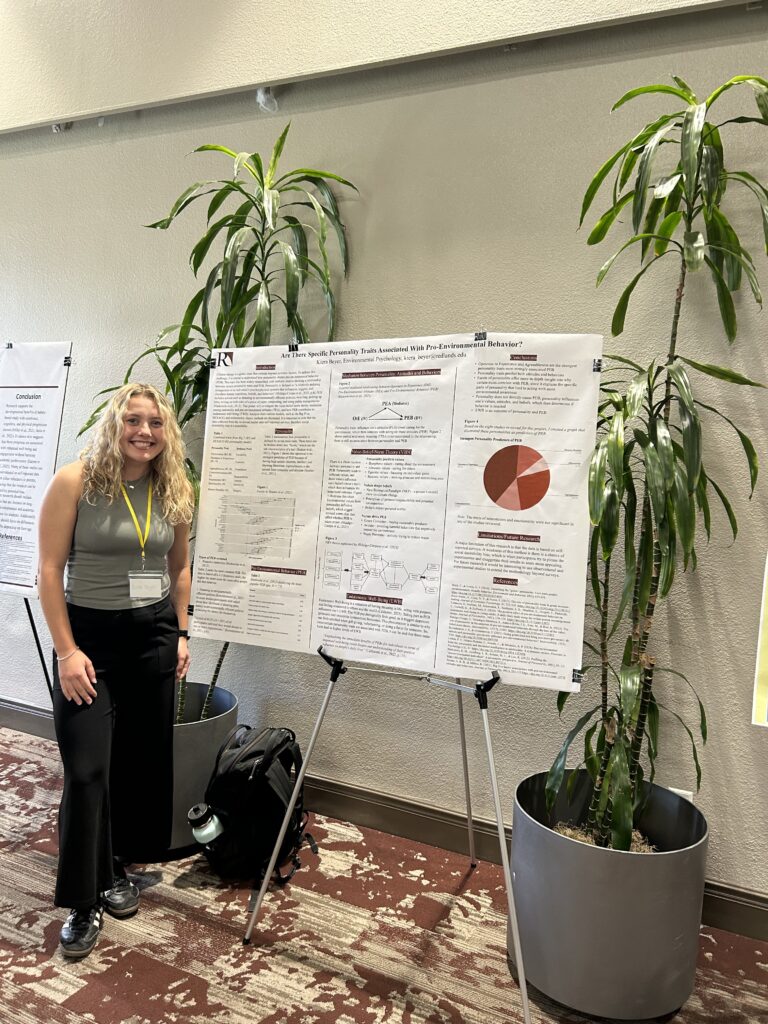
However, Beyer said personality alone does not guarantee pro-environmental behaviors. People often need some kind of internal motivation to take the step towards environmental action.
In terms of a broader social justice context, Beyer said this relates to how concern and passion can exist but don’t always manifest into change.
Wrapping up the daytime program were capstone presentations by seniors majoring in Women, Gender & Sexuality (WGS) Studies as well as Race and Ethnic Studies.
Civil Rights Icon Dolores Huerta Speaks
As hues of sunset began to color the sky, lines formed outside of Orton Center for those hoping to hear renowned civil rights activist Dolores Huerta speak as part of Redlands’ Convocations & Lecture Series program.
After several welcome and introductory remarks by students and faculty, Huerta took the stage. She outlined foundations of equality and grassroots activism, and then shared her story and the lessons learned of improving agricultural workers’ conditions.
“The people that are oppressed, they know what the issues are,” she said. “They know what the problems are, and they have the intelligence to be able to solve their own problems.”
Huerta then touched on the pressing social injustices of today. Huerta emphasized the power and importance of voting in influencing change, pointing to this November’s midterm elections as a key opportunity to exercise this civil right and duty.
“We’re going to go marching forward,” Huerta said. “You are all going to create the new world – the world that we need.”
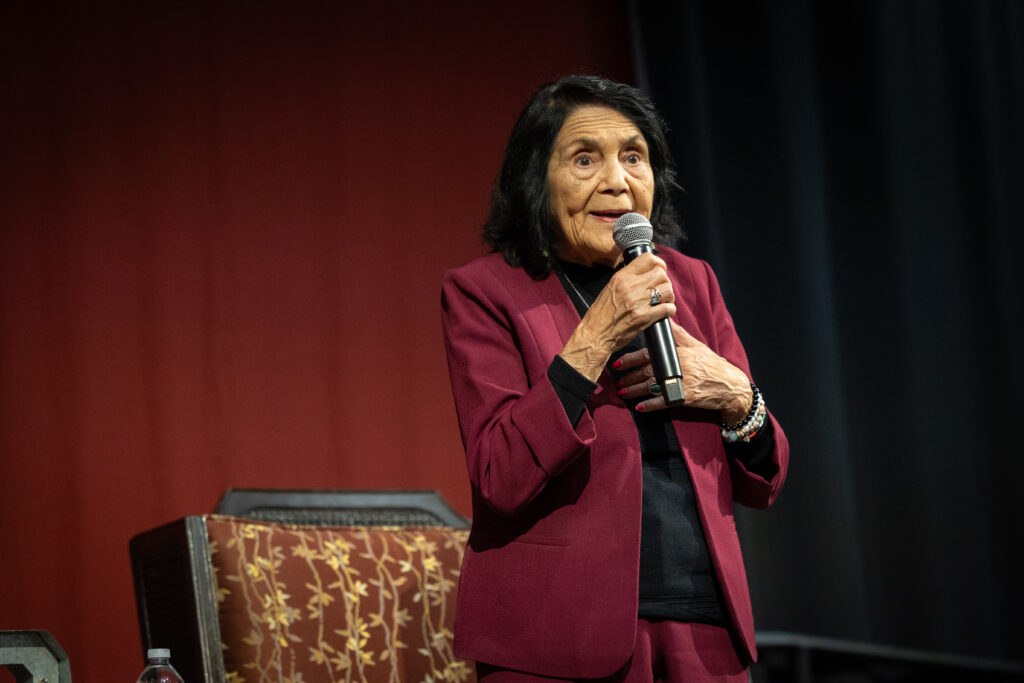
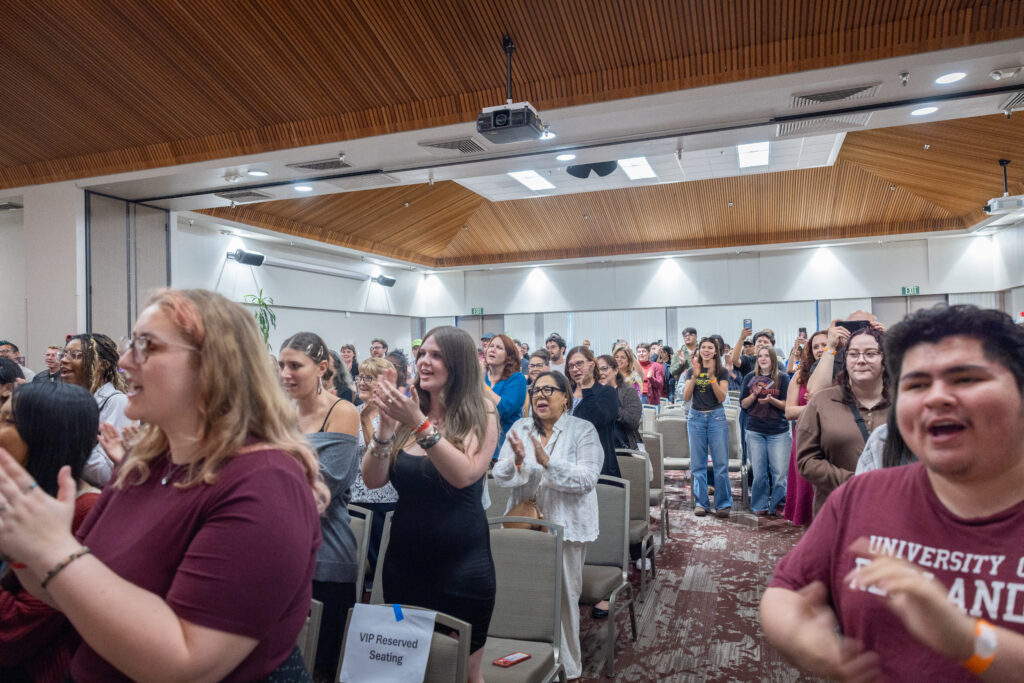
Huerta was then joined on stage by Sandy Vasquez, the vice president of student affairs, for a moderated discussion with questions that had been submitted by students prior to the conference. After Huerta shared her insights, she invited the audience to join her in the famous “Sí, se puede” chant to remind people of their individual power and the overarching goals of social justice.
As the speech came to a close, Vasquez presented Huerta with a gift from the university and announced the establishment of an award in her honor. The Dolores Huerta Civic Leadership Medallion, Vasquez said, will annually recognize an undergraduate student who demonstrates exceptional commitment to community leadership, advocacy and social change.
Behind the Scenes
The Social Justice Conference was established in 2022 as a combination of the feminist-focused WGS Studies and ethnic-focused Race and Ethnic Studies conferences.
“It’s a really powerful conference, because it’s not prioritizing any one issue,” Everette Davidove said. “It’s recognizing that systems of domination are simultaneously operating.”
Davidove, a WGS professor who instructs the Social Justice Action class that organizes the conference, said its interdisciplinary and intersectional nature amplify the diversity and collaboration of activism.
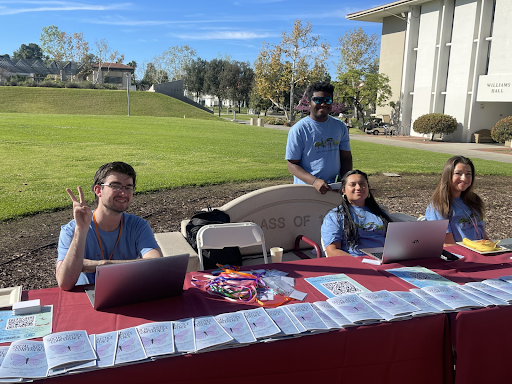
Davidove’s students have spent all semester planning the conference, including choosing a theme, keynote speaker, decorations and figuring out other logistics. The class chose the theme of “Hope: Creating Change Together” in response to the abundance of negativity in the world, Eme D’Antonio ‘26 said.
“It would be really nice to focus on hope and focus on some positives and what we can do,” she said.
Butterfly decorations accompanied this theme, which Davidove explained are symbolic of social justice and hope, with the monarch butterfly specifically relating to immigrant rights. The class also designed shirts, with one student’s design on the front and another on the back.
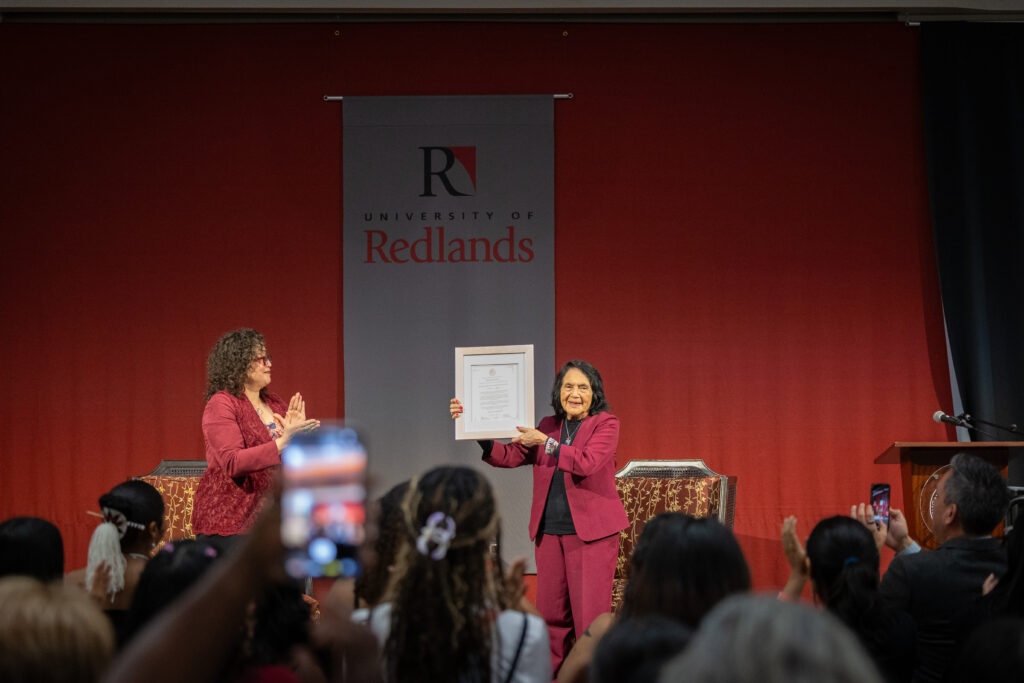
As for the keynote speaker, students said options ranged from local to national and international leaders before they decided on Huerta.
“She’s someone who literally encompasses hope,” D’Antonio said.
Huerta and her legacy also align with the university’s equality ideals as a Hispanic-Serving Institution. The Social Justice Action students said they were surprised the civil rights legend accepted their invitation, and Huerta said she was just as surprised to be invited. Huerta has never been to the University of Redlands, and said she appreciates its equality initiatives such as this Social Justice Conference.
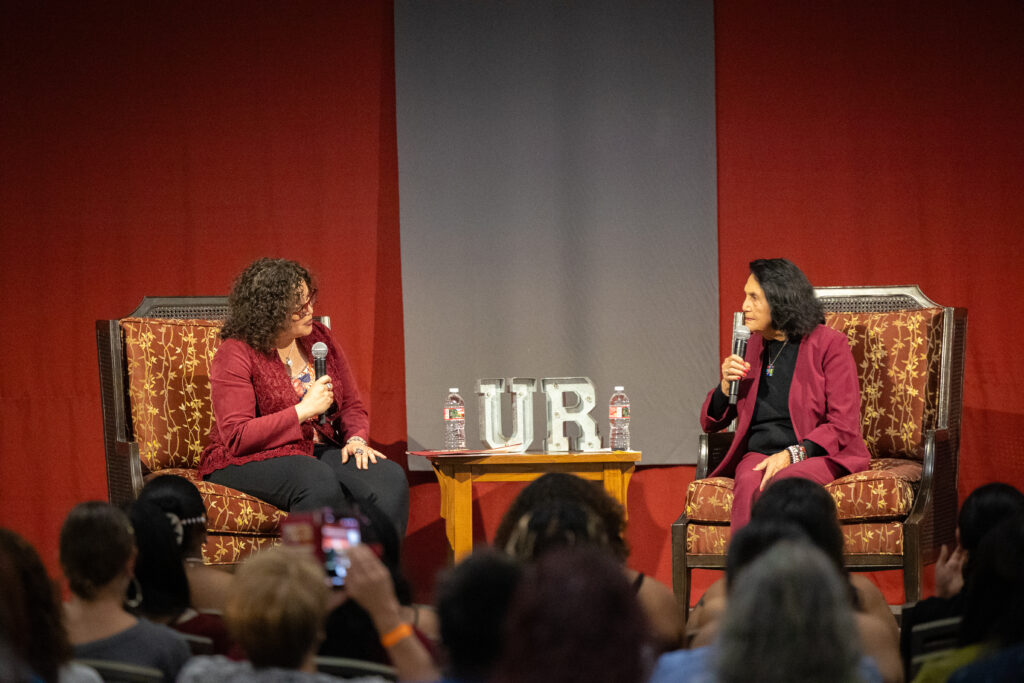
Developing Student Activism
This was Davidove’s inaugural year teaching the course and overseeing the conference, though he has always been involved while a professor at Redlands. In taking this Social Justice Activism class, students said they have learned how to organize in a democratic and inclusive manner.
“It really showcased that no matter where your talents lie, they are going to be helpful in some way, shape or form,” Emma Boyd ‘26 said.
“I’ve never really done something like this before,” Liam Quinn ‘26 added.
Some of the things Boyd hoped attendees took away from this conference are that activism comes in all shapes and sizes and even seemingly small efforts make an impact. Davidove echoed this point as well as Huerta’s message about taking these ideas beyond the walls of Orton and out into the community.
Along with the efforts of students and faculty, this Social Justice Conference was made possible by funding from numerous entities across campus, including the Johnston Center for Integrative Studies, Public Square, Redlands Student Government, Student Affairs, Office for Inclusion and Community, Cummings Lectureship on World Peace, Shirk Lectureship, Voices of Impact Convocations and Lectures and Hispanic Serving Institution grant.
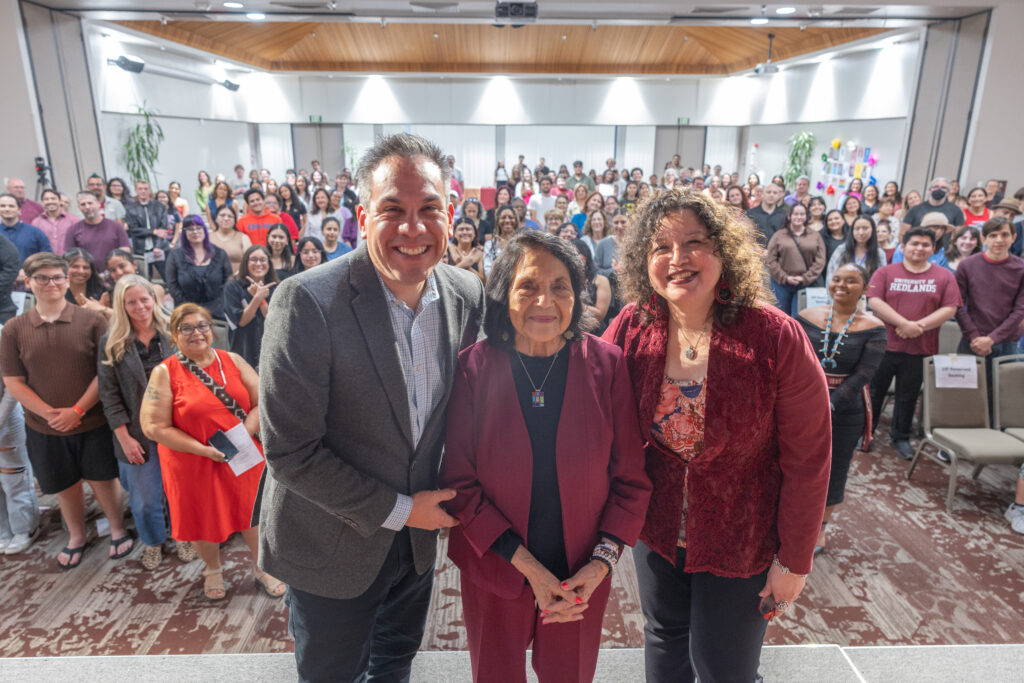
Editor’s Note: This conference took place before the New York Times published an investigation into sexual assault allegations against César Chávez, Dolores Huerta’s colleague in the United Farm Worker labor movement — including allegations made by Huerta herself. After the story was published, University of Redlands President Krista Newkirk sent a campuswide email regarding the troubling news and reminding the Bulldog community about university resources including the Office for Inclusion and Community, Office of Equity and Title IX and the Counseling Center.

McKenzie Rose, a sophomore double-majoring in Environmental Studies and Journalism, serves as the Redlands Bulldog Editor-in-Chief this semester. McKenzie first dabbled in the world of journalism during high school by working as a freelance reporter with the municipal Hermiston Herald and regional East Oregonian newspapers near her hometown of Echo, Oregon. She enjoys running (participating in the university’s track & field and cross country teams), spending time with her pets, traveling and listening to good ‘ol country music!

Outstanding article. I was most pleasantly surprised .